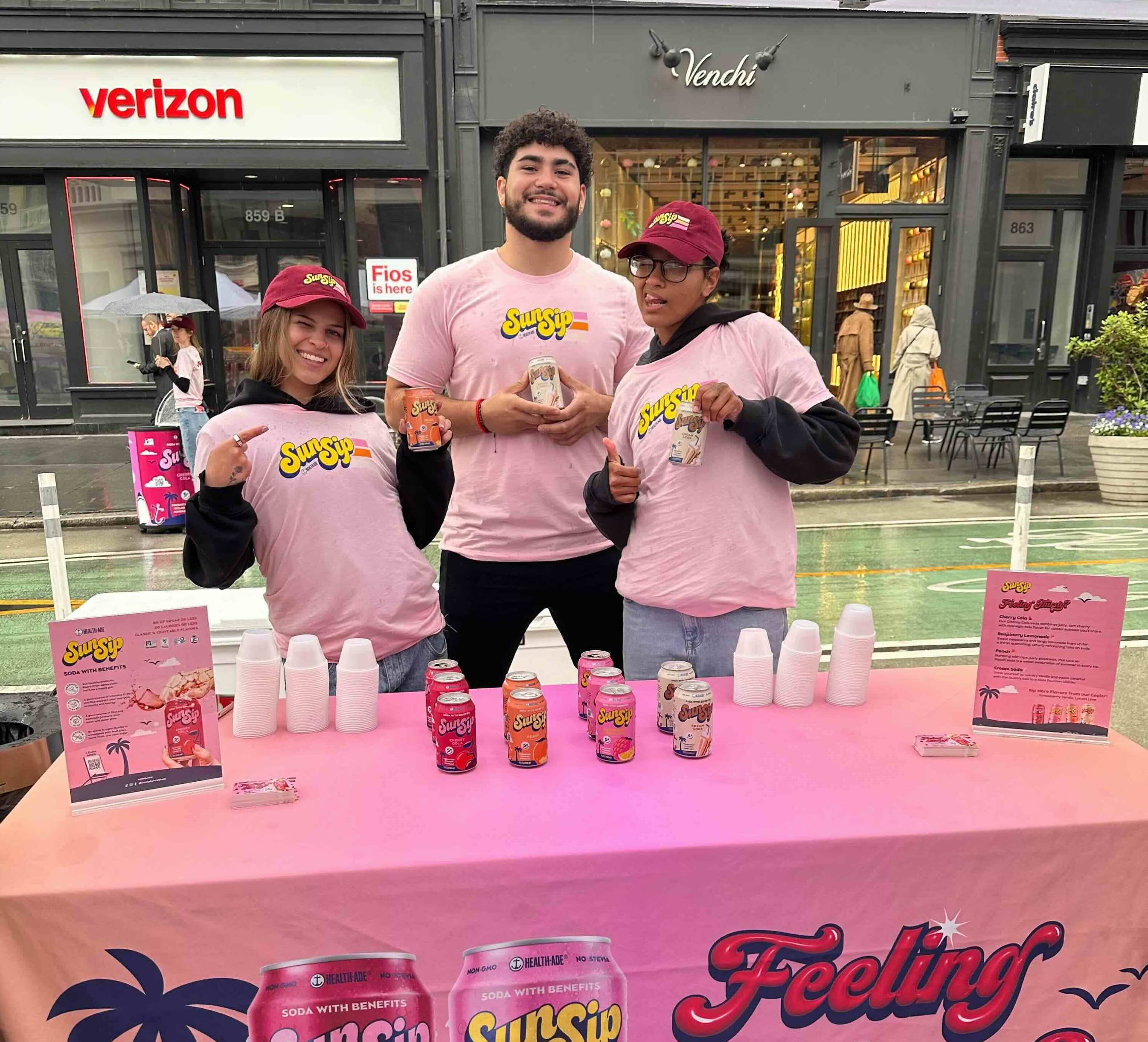
If you’re looking for product sampling ideas that actually drive results, the key is to go beyond simply offering free samples and instead build a strategic product sampling marketing approach. Many brands use these sampling marketing tactics not just to introduce an existing product, but to build brand loyalty and turn potential customers into long-term buyers.
At Promobile Marketing , we’ve spent over 10 years helping brands execute high-impact product sampling marketing campaigns that deliver measurable results. From retail locations and pop-up experiences to targeted direct mail campaigns and influencer sampling, we understand how to design a sampling campaign that reaches your target market and helps boost sales. Reach out to us now to execute your product sampling campaigns.
In this blog, we’ll walk through some of the most popular product sampling strategy ideas that many brands use to build brand awareness, increase sales, and generate user engagement. We’ll also share practical tips on choosing the right sampling method.
What is Product Sampling Marketing? Product sampling marketing is a marketing strategy where brands distribute free samples or sample-sized products to potential customers, allowing them to experience a product firsthand before making a purchase. In our experience, this approach is one of the most effective ways to introduce an existing product or support a product launch, because it removes hesitation and lets consumers evaluate product quality directly. The goal of any product sampling campaign is to get the product into the hands of the right audience, build trust quickly, and influence future purchases through real experience rather than just advertising.
The effectiveness of sampling marketing is backed by data. According to research from the Event Marketing Institute , 65% of consumers who sample a product go on to purchase it, and more than 75% say the sample influenced their decision. Longer-term, studies show that over 50% of those consumers make repeat purchases, highlighting how a well-executed product sampling marketing campaign can improve both conversion rates and customer loyalty. In our experience, this is why many brands use free product samples not just to increase sales, but to build brand loyalty, generate positive feedback, and create strong word of mouth recommendations.
You’ll find product sampling marketing campaigns used across a wide range of industries. Food and beverage brands rely heavily on in-store sampling in retail locations to drive immediate sales, while beauty and personal care brands often use subscription boxes, influencer sampling, and direct mail sampling to reach new audiences. Even service-based businesses use sampling initiatives like free trials to encourage customers to engage with their offerings. For instance, we’ve seen brands combine customized packaging with trial-size products and pop-up experiences to create memorable interactions that generate buzz, increase social media engagement, and deliver valuable consumer insights.
Why Product Sampling Still Works in Modern Marketing One of the biggest reasons sampling marketing works is because it directly impacts buying behavior. According to research from the Event Marketing Institute, 65% of consumers who receive free product samples go on to make a purchase, and more than 75% say the sample influenced their decision. In our experience, these numbers translate into real business outcomes, especially when brands focus on reaching the right audience through the right distribution method. This is why many brands continue to prioritize product sampling marketing campaigns as a core part of their marketing strategy to boost sales and improve conversion rates.
Another key factor is trust. Consumers are naturally skeptical of advertising, but offering samples removes that barrier by letting them evaluate product quality themselves. As Gio Martinez, CSO and Co-Founder at Promobile Marketing, puts it, “When you allow consumers to experience a product firsthand, you eliminate doubt and replace it with confidence. Sampling doesn’t just introduce a product, it builds trust instantly, and that trust is what drives both conversion and long-term brand loyalty.”
We’ve seen this play out across multiple product sampling marketing campaigns. For example, we worked with a beverage brand launching into new retail locations that wanted to reach new audiences quickly. By combining in-store sampling with mobile pop-up experiences, the sampling initiative allowed thousands of potential customers to try the product in high-traffic areas. The efforts led to a noticeable lift in sales and conversion rates, along with strong positive feedback and increased social media mentions, helping the brand build brand awareness in a competitive market.
Beyond trust and conversions, product sampling also creates memorable brand experiences that digital ads simply can’t replicate. When consumers interact with sampling products in a real-world setting, it creates a sensory experience that sticks. According to the U.S. Small Business Administration , businesses that actively engage customers and gather valuable feedback are better positioned to refine their marketing strategy and improve long-term performance. In our experience, these interactions often lead to deeper customer loyalty, stronger user engagement, and more informed future sampling campaigns.
Finally, one of the most underrated benefits of product sampling marketing is its ability to drive organic promotion . When people receive free samples they enjoy, they are far more likely to share their experience with others, both offline and online. This leads to word of mouth recommendations, increased social media engagement, and authentic user-generated content that acts as powerful social proof.
We often recommend pairing influencer sampling with a broader sampling campaign to amplify reach and encourage honest reviews. In many cases, these combined efforts help brands generate buzz, attract new audiences, and turn first-time users into loyal customers and long-term brand loyalists.
What Do Product Sampling Companies Do? Product sampling companies specialize in designing and executing sampling campaigns to target potential customers. To accomplish this goal, product sampling companies work closely with brands to handle various aspects of the sampling process: identifying the target audience; determining the best products, packaging, and presentation for sampling; strategizing sample distribution; managing distribution logistics; and measuring effectiveness.
Identifying the Target Audience Pinpointing the specific consumer groups most likely to be interested in the product is key to the success of any sampling campaign. Sampling companies excel at this, primarily because of their experience in the kind of research necessary to identify each brand's ideal consumer — the customer most likely to be receptive to the brand's products and message.
A sampling company will consider demographics, interests, and buying habits of these customers. Distributing samples to people who wouldn't be interested in your product is a waste of resources, so focus on your target audience as you decide on sampling method and product choice. Once the target audience has been identified and profiled, the sampling company shifts gears into creation of sampling strategies tailored to reach and influence those ideal customers.
Sample Selection and Distribution With the targets identified, the sampling company develops a plan for strategically distributing samples through various channels. Not all products are ideal for sampling — companies recommend choosing products that best represent the brand and are likely to excite the target audience, but also are relatively easy to package, store, ship, and produce.
Consider sample-size, too: Samples should be large enough to provide a good experience but small enough to control costs. Packaging should be eye-catching and informative, and include a call to action.
There are various ways to distribute samples, and your choice should align with where your target audience is most accessible and engaged:
In-store : Typically a booth in retail stores frequented by your target audience, this approach allows for direct interaction with potential customers as well as product demonstrations.Direct mail : Sending samples directly to consumers' homes is effective for targeted campaigns and avoids geographical limitations.Online : This is the most effective method for digital products like books and software, but other brands can also provide codes or coupons online for picking up free samples in person.Event-based : Distributing samples at trade shows, conferences, pop-ups, activations, or other events can be a great way to reach your target audience. These occasions provide a captive audience already interested in your industry, making them more receptive to new products.Campaign Management All aspects of sampling logistics and campaign management fall under the sampling company's purview. Depending on the type of sampling effort your brand is planning, managing the myriad details of the campaign will involve different aspects of shipping, storage, packaging, permitting, and distribution.
A direct-mail sampling campaign might involve optimizing packaging for sample protection and delivery cost, for example. An event- or retail-based sampling campaign could require recruiting and training staff, plus equipping them with the extensive product knowledge and ability to engage with the audience to both create connections with customers and collect data.
Because sampling is, at its core, a form of experiential marketing, a good sampling company will put considerable effort into creating a positive sampling experience for the audience. Leading sampling companies are implementing sophisticated multi-sensory experiences that go beyond simple product trials to create lasting brand impressions and drive higher engagement.
12 Creative Product Sampling Ideas for Brands A successful product sampling marketing campaign is rarely about just handing out free samples. Instead, it is about combining creativity, precise targeting, and the right timing to reach your target audience effectively. When done right, these ideas don’t just increase brand awareness, but also improve sales and conversion rates, generate valuable feedback, and help brands build long-term customer loyalty.
1. In-Store Sampling Events In-store sampling remains one of the most popular product sampling strategy options because it reaches consumers at the exact moment they’re ready to make a purchase. By offering free product samples in retail locations or grocery stores, brands can directly influence conversion rates and boost sales.
In our experience, adding live demonstrations significantly increases engagement. For instance, we worked with a snack brand that introduced a new product through in-store sampling across multiple stores. The sampling campaign resulted in a noticeable spike in same-day sales and strong positive feedback from shoppers. This approach is especially effective for food, beverage, and beauty brands where product quality can be experienced instantly.
2. Pop-Up Sampling Activations Pop-up experiences are a powerful way to turn product sampling into an immersive marketing campaign. These activations allow brands to create temporary, branded environments in high-traffic urban areas, giving consumers a chance to interact with the product firsthand.
We recommend this approach when the goal is to generate buzz and create shareable moments. For example, a beverage client we supported launched a city-wide sampling initiative using pop-ups in busy districts. The efforts led to increased social media mentions, strong user engagement, and exposure to new audiences. This is particularly effective for brands looking to stand out in competitive markets.
3. Street Team Sampling Campaigns Street team activations are a classic but still highly effective sampling method for reaching large numbers of potential customers quickly. Teams distribute sample-sized products in busy areas like transit hubs, business districts, or near major events.
In our experience, this works best when paired with strong market research to ensure you’re reaching the right audience. For example, we helped a beverage brand target commuters during peak hours, which helped build brand awareness and drive future purchases through increased familiarity. It’s a cost-effective way to scale sampling marketing while maintaining visibility.
4. Event-Based Sampling Event-based sampling allows brands to connect with highly engaged audiences at concerts, festivals, and sporting events. These product sampling campaigns align your brand with experiences that consumers already enjoy, making the interaction more memorable.
We’ve seen brands benefit massively from this approach. For instance, a wellness brand we worked with distributed trial-size products at a major fitness event, which helped them reach a highly relevant target market. The campaign not only delivered positive reviews but also generated word of mouth recommendations and increased customer loyalty.
5. Subscription Box Partnerships Partnering with subscription boxes is a smart way to deliver free samples directly to a curated and highly targeted audience. This distribution method allows brands to reach consumers who are already open to discovering new products.
In our experience, this is especially effective for beauty, wellness, and lifestyle brands. For example, one skincare brand we supported included sample-sized products in subscription boxes and saw strong conversion rates from recipients who later purchased full sized products through their e-commerce site. This approach also helps brands gather feedback and gain valuable insights for future campaigns.
6. Influencer Sampling Campaigns Influencer sampling combines product sampling marketing with digital amplification. Brands send samples to influencers who then share their experience with their followers, creating social proof and driving social media engagement.
We always recommend this as part of a broader product sampling strategy. For instance, a beauty brand we worked with used influencer partnerships alongside a physical sampling campaign, which led to increased user-generated content, more honest reviews, and stronger brand awareness among new audiences. When executed well, this approach can significantly increase sales and turn first-time users into brand loyalists.
7. Campus Sampling Programs Campus activations are one of the most effective product sampling marketing strategies for reaching younger target audiences and building early brand loyalty. By distributing free samples on university campuses, brands can introduce new products directly to students who are highly social, trend-driven, and likely to share their experiences.
In our experience, this sampling campaign works especially well for food, beverage, and tech brands. For example, we supported a snack brand with a campus-based sampling initiative that distributed trial-size products during orientation week. The efforts led to strong social media engagement, increased word of mouth recommendations, and repeat purchases among students. When executed correctly, campus programs help create long-term brand loyalists.
8. Workplace Sampling Campaigns Workplace activations allow brands to reach professionals during their daily routines by delivering free product samples directly to offices or co-working spaces. This distribution method is highly targeted and effective for engaging potential customers in a focused, distraction-free environment.
As Gio Martinez, CSO and Co-Founder at Promobile Marketing, explains: “Workplace sampling works because you’re meeting consumers where they spend a significant part of their day. When you integrate a product into their routine, it feels natural and that’s what drives trial, adoption, and repeat purchases.”
We’ve seen this strategy work particularly well for snacks, beverages, and wellness brands. For instance, a beverage client we worked with ran a product sampling campaign across multiple offices, and the convenience of offering samples in that setting led to strong positive feedback, improved conversion rates, and increased future purchases.
9. Gym and Fitness Center Sampling Sampling in gyms and fitness centers is a highly effective sampling method for brands targeting health-conscious consumers. By placing sampling products in environments where people are already focused on wellness, brands can align their product quality with the audience’s lifestyle.
In our experience, this works best for supplements, beverages, and fitness-related products. We once supported a wellness brand that distributed sample-sized products in gyms across key retail locations, which helped them generate buzz and collect valuable feedback from a highly relevant target market. This approach not only helped increase sales but also strengthened customer loyalty among fitness-focused consumers.
10. Digital-to-Physical Sampling Campaigns A digital-to-physical product sampling campaign combines online engagement with offline product experiences. Brands invite users to sign up online to receive free samples, then send samples directly to their homes through direct mail.
We recommend this approach for brands looking to collect consumer insights and build a database for future campaigns. For example, a beauty brand we worked with used this sampling marketing strategy to gather customer data through sign-ups, then followed up with email and SMS campaigns. This led to strong conversion rates and increased traffic to their e-commerce site. It’s a powerful way to connect digital marketing strategy with real-world product experience.
11. Seasonal or Holiday Sampling Campaigns Timing can make or break a product sampling marketing campaign, which is why seasonal activations are so effective. Aligning your sampling campaign with holidays or seasonal trends makes the experience more relevant and engaging for consumers.
For instance, we’ve seen brands launch sampling initiatives during summer events, holiday shopping periods, or back-to-school seasons to reach new audiences at the right moment. One beverage brand we worked with ran a summer-themed product sampling campaign that used customized packaging and themed pop-up experiences, resulting in increased brand awareness, strong user engagement, and more positive reviews. Seasonal campaigns are especially useful for driving short-term sales while supporting long-term brand loyalty.
12. Experiential Sampling Tours Experiential tours take product sampling marketing to the next level by bringing the brand directly to consumers across multiple cities or regions. These mobile activations allow brands to create large-scale, memorable interactions through branded vehicles, pop-ups, and live experiences.
In our experience, this is one of the most impactful product sampling marketing campaigns for brands looking to scale quickly and reach diverse target markets. For example, we worked with a beverage company on a multi-city tour that combined pop-up experiences with in-store sampling and street-level activations. The campaign helped the brand reach new audiences, significantly increase brand awareness, and drive strong sales across multiple regions. When done right, experiential tours not only boost sales but also create lasting impressions that turn first-time users into loyal customers.
Benefits of Product Sampling Beyond just increasing sales — because people are more likely to buy something they've already tried and enjoyed — here are some advantages to giving away product samples to consumers:
Sampling puts products in consumers' hands, often for the first time For some product categories, like food and beverage, the best way to convince consumers to buy a product is often to let them try it first. This makes a multi-city sampling tour a uniquely effective means of launching new products. Condiment brand Sir Kensington's took this approach when launching its new vegan mayonnaise via a 20-state, 83-stop food truck tour that let consumers sample the product with French fries.
Sampling boosts brand awareness Free samples generate brand recognition, especially for new products or in new markets. Consumers can try your product and see if they like it, a low-risk activity that sparks interest and curiosity. When companies distribute free samples to a wide range of consumers, they generate excitement and intrigue around the brand.
Flavored-water brand Lemon Perfect used sampling to increase brand awareness and distinguish itself from other enhanced-water brands. The brand targeted seven markets with high concentrations of its target audience — young, diverse, health-conscious consumers — for a sampling campaign based out of a fleet of branded vehicles. In just under two months of working with Promobile Marketing, Lemon Perfect managed to give away 300,000 samples.
Sampling inspires customer feedback and content Consumers who've sampled are more likely to share their experiences within their personal and social networks. This word-of-mouth marketing amplifies brand visibility and reaches a broader audience.
Samples provide valuable insights into customer preferences. By observing how people react to your product, you can gain valuable feedback to improve your offerings or marketing strategy.
Sampling also creates opportunities to accumulate reviews, unboxing videos, and other user-generated content. UGC or user-generated content helps you stand out from the crowd, get your customers' attention, and build social proof. UGC also increases sales ; studies show that 90% of customers decide to purchase based in part on user-generated content.
Sampling cultivates customer loyalty Sampling isn't just a good strategy for attracting new customers; it's also a great way to keep existing customers engaged and loyal. According to statista.com , 72 percent of beauty brand customers say they're most loyal to brands that give away samples. Customers appreciate the chance to try something new for free, and it can encourage them to become and remain repeat customers.
How to Choose the Right Product Sampling Strategy Choosing the right product sampling strategy is what separates an average sampling campaign from an effective product sampling campaign that truly drives sales and conversion rates. The most successful product sampling marketing campaigns we carry out at Promobile Marketing, follow a clear, step-by-step approach that ensures the sample distribution process reaches the right audience, delivers valuable insights, and supports both short-term and long-term business goals.
The first step is to clearly define your target audience . Before deciding on any sampling method, we recommend using market research and existing consumer insights to understand who your potential customers are, where they spend time, and what influences their purchase decisions. For example, if your target market consists of young professionals, a workplace or direct mail sampling approach may be more effective than in-store sampling. In our experience, brands that focus on reaching the right audience see stronger conversion rates, better user engagement, and more meaningful positive feedback.
Next, consider your product type and usage . Not all sampling products perform the same way, so it’s important to think about how the product is best experienced. Food, beverages, and beauty products often perform well in in-store sampling or pop-up experiences where consumers can try the product immediately. On the other hand, items that require more time or context like supplements or skincare may perform better through direct mail sampling or subscription boxes, where users can test sample-sized products over time. We always advise brands to ask: “What environment allows consumers to experience this product at its best?”
The third step is selecting the right distribution method and location . Choosing high-traffic or contextually relevant environments such as retail locations, gyms, university campuses, or events, can significantly impact the success of your product sampling campaign. For instance, distributing free product samples in grocery stores can lead to immediate sales, while pop-up experiences in busy urban areas can help generate buzz and reach new audiences. It depends on your goals, but in most cases, aligning your sampling initiative with where your audience already is will deliver stronger results.
After that, align your sampling campaign with your broader marketing campaign goals . Ask yourself whether your priority is to increase brand awareness, boost sales, support a product launch, or gather valuable feedback. In our experience, brands that clearly define their objectives upfront are better able to measure success and refine their future sampling campaigns. For example, if your goal is to drive repeat purchases, you might combine free samples with incentives like discounts or loyalty programs to encourage customer loyalty and long-term engagement.
Finally, integrate both digital and offline channels to maximize impact . The most effective product sampling marketing strategies combine physical sampling with digital touchpoints such as QR codes, email follow-ups, and social media engagement. This allows brands to collect data, track conversion rates, and turn sampling interactions into measurable outcomes. For instance, a brand might send samples through direct mail, then follow-up with a campaign encouraging customers to leave a positive review or share their experience online. This helps generate user-generated content, social proof, and actionable insights for future campaigns.
Implementing a Successful Sampling Campaign Successful sampling campaigns are built on more than mere freebies. They start with clearly articulated goals, a keen understanding of the target audience , and a solid plan for followup. Here are some tips for building a campaign that connects with your ideal customers.
Define Your Goals What do you want to achieve? Is it brand awareness for a new product launch, increased sales of an existing product line, or customer feedback? Clear goals will guide your approach.
Plan for a Smooth, Shareable Presentation From the consumer's perspective, the process of finding, receiving, and using the sample is a customer service experience, so make sure it's a pleasant one. This means working out how the samples will be produced, packaged, and distributed, as well as any supporting information like instructions, ingredients, and specifications.
Unboxing matters, especially if your target audience includes social media influencers or if you're aiming to gather UGC through the campaign. Complement your sampling campaign with digital content that educates about the product, shares user experiences, and encourages social sharing. This can amplify the impact of your sampling effort.
For food and beverage brands, strategic food pairings can significantly enhance product perception and increase the likelihood of purchase by maximizing flavor impact. Brands looking to create viral moments are experimenting with high-low snacking combinations that mix luxury ingredients with everyday products to generate social media buzz and memorable experiences.
Follow Up Don't leave consumers hanging after receiving the sample. Make purchasing the sampled product — and your brand's other products — as easy and appealing as possible by including a coupon or discount code with the sample. Send follow-up emails with additional product information, special offers, or invitations to join a loyalty program.
Tracking and Analyzing Results Build into your campaign the means to monitor key metrics like website traffic after sampling and social media engagement. This will help you gauge the campaign's effectiveness and identify areas for improvement for future campaigns.
Data gathering might also involve including unique QR codes on the packaging that link to landing pages with product information, surveys, or social media profiles. This allows for easy data collection and engagement tracking. Create opportunities for samplers to provide their email addresses or phone numbers in exchange for access to future promotions via email or SMS.
Actively seek feedback by incorporating feedback mechanisms like surveys , social media polls, or contests into your campaign. Create incentives for sharing feedback or reviews such as discounts, swag, or free samples of your other products.
The sampling company gathers data and consumer feedback on the sampled product to provide valuable insights to the brand. This analysis might assess brand awareness and perception; sales pre-, during, and post-campaign; brand loyalty as measured by repeat business, social media engagement, and other measures; and direct feedback from consumers who participated in the sampling campaign gathered via surveys, reviews, or social media interactions.
Taken as a whole, this post-campaign analysis provides valuable insights about consumer preferences, product perception, and potential areas for improvement, and indicates potentially fruitful directions for future sampling efforts.
By carefully planning, targeting the right audience, and choosing the most effective sampling method, brands can leverage product sampling to achieve their marketing goals and build stronger relationships with consumers.
How to Measure the Success of a Sampling Campaign A well-executed sampling campaign should deliver clear, measurable outcomes such as improved sales and conversion rates, stronger brand awareness, and deeper customer loyalty. Without tracking results, it becomes difficult to understand what worked, what didn’t, and how to optimize future sampling campaigns.
As Gio Martinez, CSO and Co-Founder at Promobile Marketing, explains: “Sampling without measurement is just distribution. The real value comes from understanding how those interactions translate into behavior—purchases, engagement, and long-term loyalty. That’s where brands unlock the full power of product sampling.”
The first key metric to track is product trial rates . In other words, how many people actually used or tried the sample-sized products you distributed. It’s one thing to send samples, but it’s another to ensure consumers engage with them. In our experience, adding simple mechanisms like QR codes, follow-up emails, or incentives can help brands track whether consumers interacted with the product and gather valuable insights into usage behavior.
Next is conversion to purchase , which is often the most important indicator of an effective product sampling campaign. This measures how many potential customers moved from trying the product to making a purchase. Brands can track this through coupon codes, e-commerce site data, or in-store sales lifts during in-store sampling activations. We’ve seen campaigns where aligning the sampling method with the right audience significantly improved conversion rates and helped boost sales within a short period.
Another critical component is customer feedback . One of the biggest benefits of product sampling is the ability to gather feedback directly from consumers. This includes positive feedback, honest reviews, and even constructive criticism that can improve product quality or messaging. In our experience, brands that actively collect and analyze this feedback gain actionable insights that shape better marketing strategies and more effective future campaigns.
Social media engagement is also a powerful indicator of success, especially when campaigns incorporate influencer sampling or encourage user-generated content. Tracking social media mentions, shares, and engagement levels helps brands understand how well their sampling initiative is resonating with new audiences. We often recommend encouraging customers to share their experience online, as this creates social proof and drives word of mouth recommendations that extend the reach of the campaign far beyond the initial distribution.
Finally, brands should evaluate return on investment (ROI) to understand the overall impact of their product sampling marketing campaigns. This involves comparing the cost of the campaign against the revenue generated from increased sales, repeat purchases, and long-term customer loyalty. In some cases, ROI may not be immediate, especially for campaigns focused on building brand awareness or entering new audiences, but the long-term value can be significant.
Common Product Sampling Mistakes to Avoid Even the most creative product sampling marketing campaigns can fall short if key fundamentals are overlooked. Below is a breakdown of common mistakes in sampling marketing and how to avoid them for better sales and conversion rates and long-term customer loyalty.
Mistake
What It Looks Like
Why It Hurts Your Campaign
How to Fix It
Poor Audience Targeting
Distributing free samples to a broad, undefined audience instead of the target market
Leads to low conversion rates and wasted budget because the sampling campaign doesn’t reach the right audience
Use market research and consumer insights to identify potential customers and align your distribution method (e.g., in-store sampling, direct mail sampling) with where they are
Lack of Follow-Up Strategy
No engagement after consumers receive free product samples
Missed opportunity to drive future purchases, collect valuable feedback, or build brand loyalty
Integrate email, SMS, or retargeting campaigns to encourage honest reviews, repeat purchases, and participation in loyalty programs
Low-Quality Brand Interactions
Poor presentation, untrained staff, or low-quality sample-sized products
Damages perception of product quality and reduces trust in the brand
Invest in trained brand ambassadors, customized packaging, and ensure the sample reflects the experience of full-sized products
Inconsistent Messaging
Different messaging across channels in the product sampling campaign
Confuses consumers and weakens overall brand awareness
Align messaging across all touchpoints to support a cohesive marketing campaign
Failing to Track Performance
No tracking of data, conversion rates, or customer response
Makes it impossible to measure ROI or improve future sampling campaigns
Track key metrics like sales, engagement, and feedback to generate actionable insights and optimize your sampling strategy
How Promobile Marketing Brings Sampling Campaigns to Life One of our core strengths is executing nationwide experiential marketing campaigns that bring your product directly to consumers. Whether it’s large-scale pop-up experiences, mobile tours, or activations across key retail locations, we ensure your sampling products are placed in high-impact environments. In our experience, these immersive experiences allow consumers to engage with the product firsthand, which significantly improves conversion rates, drives user engagement, and creates memorable moments that lead to word of mouth recommendations.
We also specialize in targeted sampling strategies that ensure your free samples reach the right audience. Instead of a one-size-fits-all approach, we use market research and real-time consumer insights to identify your target market and select the most effective distribution method. In our experience, aligning the sample distribution process with audience behavior is what helps brands boost sales, generate positive feedback, and drive meaningful future purchases.
Another key part of our execution is professional brand ambassador staffing . The way your product is presented matters just as much as the product itself. Our trained teams ensure every interaction reflects your brand, communicates key messaging, and encourages customers to engage, ask questions, and share their experience. This human element is often what transforms simple free product samples into impactful brand interactions that build customer loyalty and generate positive reviews.
We also take a data-driven campaign execution approach , which is critical for optimizing future sampling campaigns. From tracking how many samples were distributed to analyzing conversion rates, social media engagement, and customer feedback, we provide brands with actionable insights that go beyond surface-level metrics. This allows you to understand not just what happened during the sampling initiative, but how it influenced sales, repeat purchases, and long-term brand loyalty.
Finally, everything we do is built around customized marketing solutions . No two brands or campaigns are the same, which is why we tailor every product sampling strategy to your specific business goals, product category, and audience behavior. Whether you’re launching a new product, promoting an existing product, or looking to expand into new audiences, we design campaigns that align with your objectives and deliver positive results.
As Gio Martinez, CSO and Co-Founder at Promobile Marketing, puts it: “Great sampling campaigns don’t happen by chance. They’re built on strategy, executed with precision, and refined through data. Our goal is to create experiences that not only introduce products, but drive real business outcomes such sales, loyalty, and long-term brand growth.”
Ready to Launch Your Product Sampling Campaign? If you’re ready to turn your product sampling marketing into a true growth driver, the next step is working with a team that understands how to combine strategy, execution, and measurable results. At Promobile Marketing, we specialize in creating effective product sampling campaigns that deliver real business impact.
Partner with Promobile Marketing today to design a customized product sampling strategy that puts your product firsthand into the hands of consumers, generates buzz, and drives measurable sales. Let’s help you create impactful sampling experiences that turn first-time users into loyal customers and long-term brand loyalists.
FAQs If you’re considering launching a product sampling marketing campaign, it’s important to understand how sampling marketing works and how it can support your broader marketing strategy. Below are some of the most common questions we hear from brands looking to increase sales, improve conversion rates, and build long-term customer loyalty through effective product sampling campaigns: